Day Prev 1 2 3 4 5 6 7 8 9 10 11 12 Next
Today we docked in Juneau, one of the largest cities in the world at over 3,000 square miles. The history of Juneau dates back to 1880 when Richard Harris and Joe Juneau, led by a Tlingit Indian named Kowee, discovered gold at the mouth of Gold Creek. This discovery led to the founding of a new town in 1906, and out of their discovery came three of the largest goldmines in the world. By the end of World War II, more than $150 million in gold had been mined. Alaska was purchased from Russia at the end of the Civil War for $7.2 million, and was known as Seward's Icebox or Seward's Folly, after then Secretary of State William Seward. Alaska gained statehood in 1959.
Juneau is the capital of Alaska, and is the only U.S. capital that is inacessible by land. It's Alaska's third largest city by population after Anchorage and Fairbanks, with about 30,000 people. Juneau is located in the Tongass National Forest, the largest temperate rainforest in North America. This gives Juneau a lot of rain, but also keeps the temperatures fairly mild with highs in the mid 30's in the winter and high 60's in the summer.
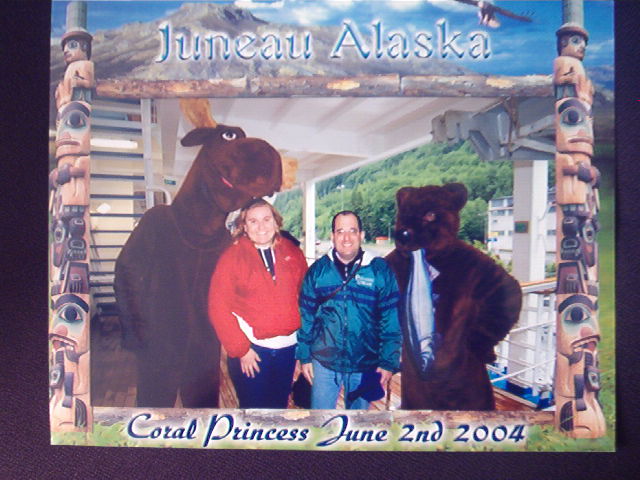
When we got off the ship we were met by these characters.
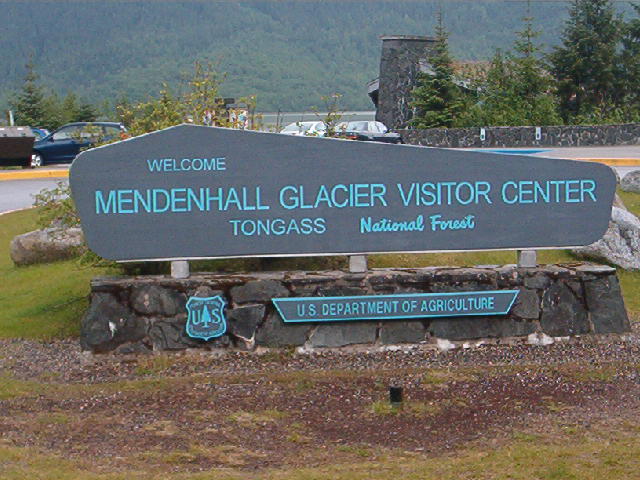
We boarded a bus to the Mendenhall Glacier, a glacier that you can almost walk up to.
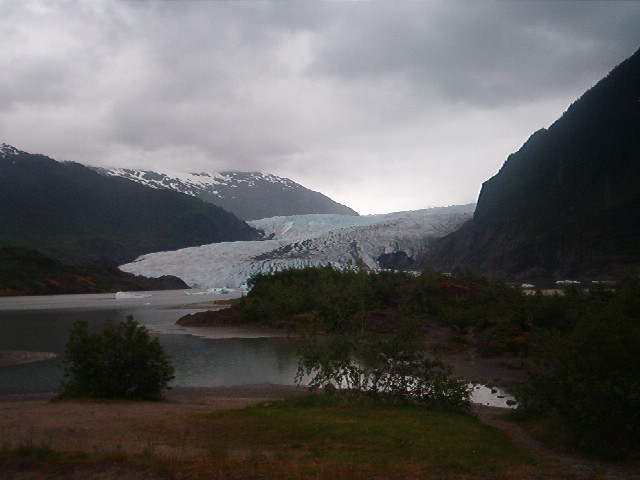
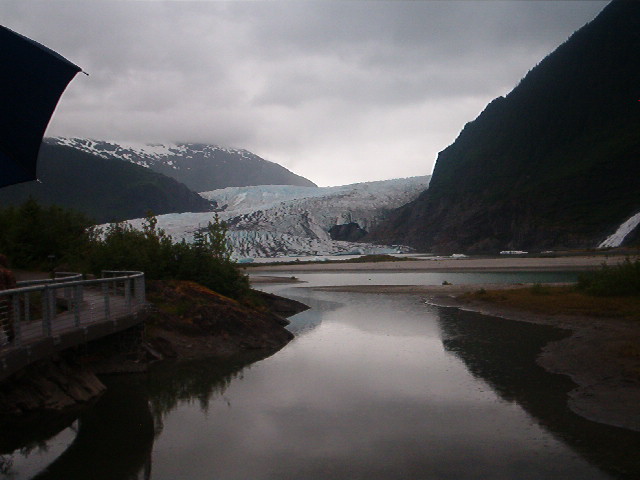
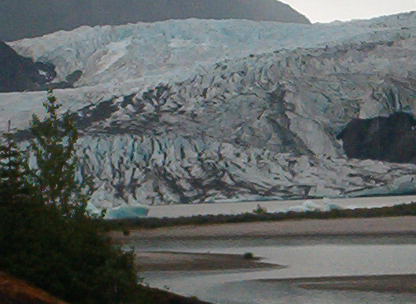
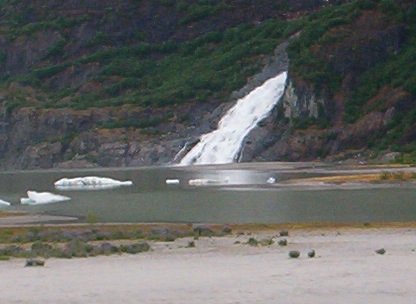
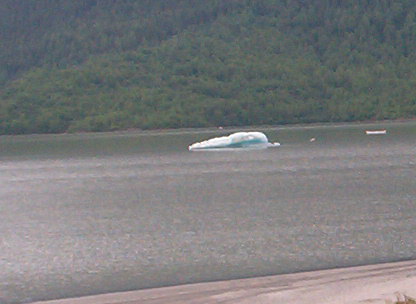
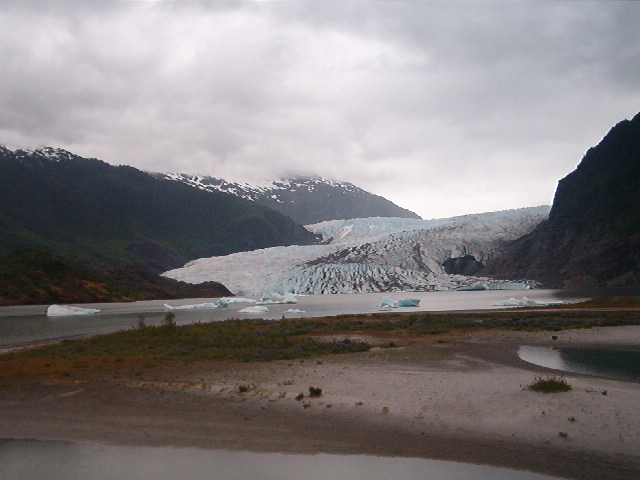
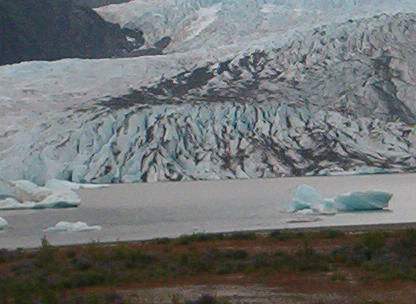
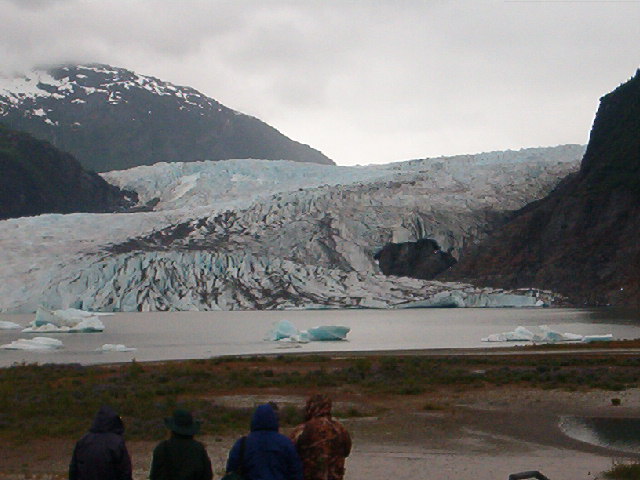
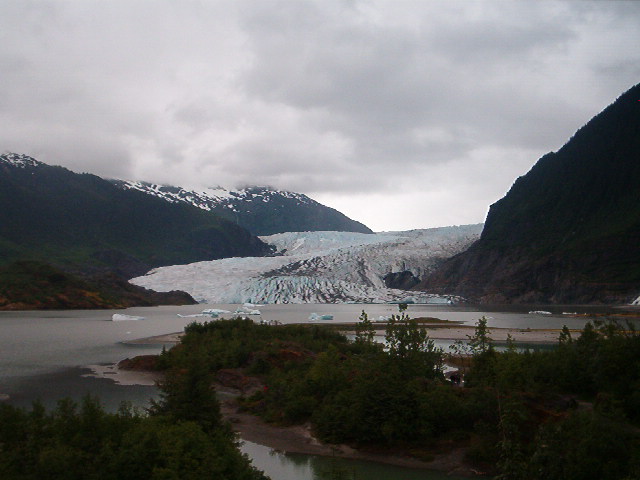
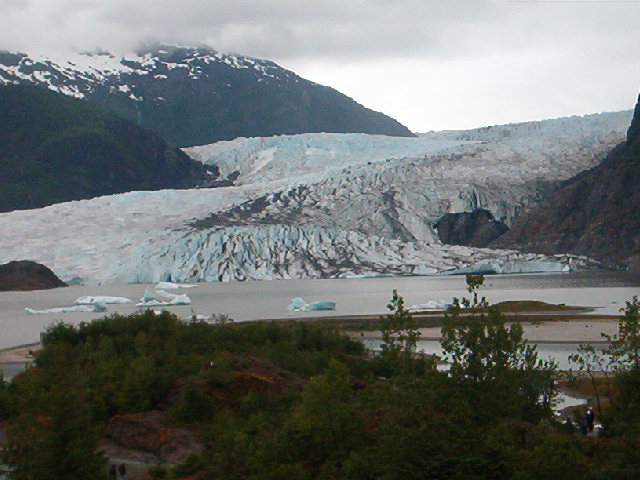
These are magnified pictures of the glacier taken by putting the lens of the digital camera up to a telescope. The glacier appears dirty because of all the rock it has ground up.
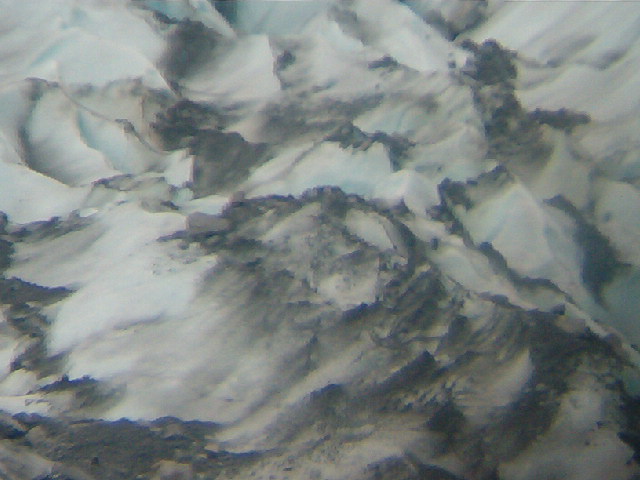
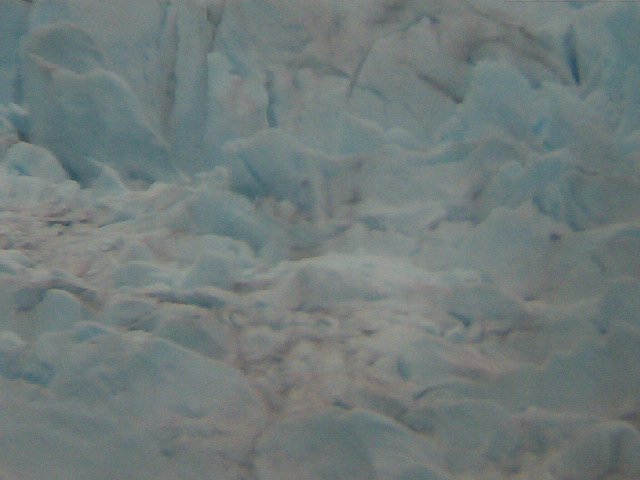
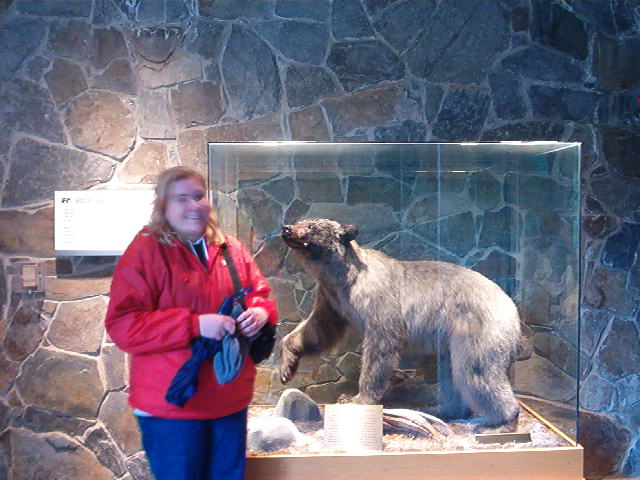
Better in the visitor's center than out in the wild .....
Next we went on a whale watching boat ride. We saw lots of eagles, and we had multiple looks of at least three humpback whales. These animals are enormous, but all you get to see is the spray from their blowhole,
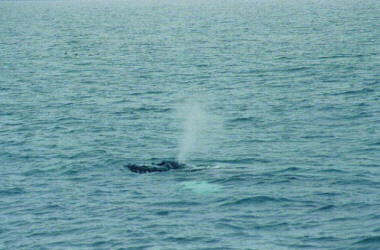
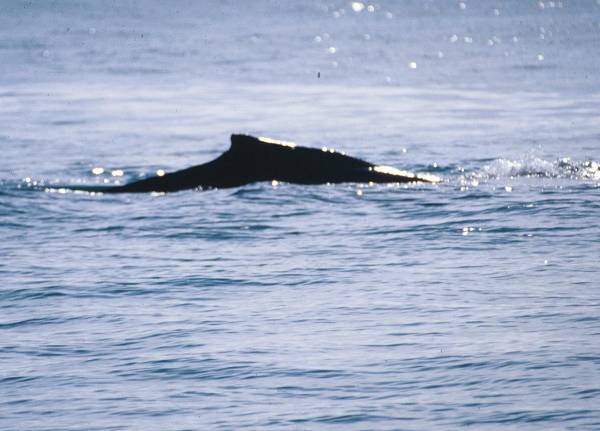
their hump arcing through the water,
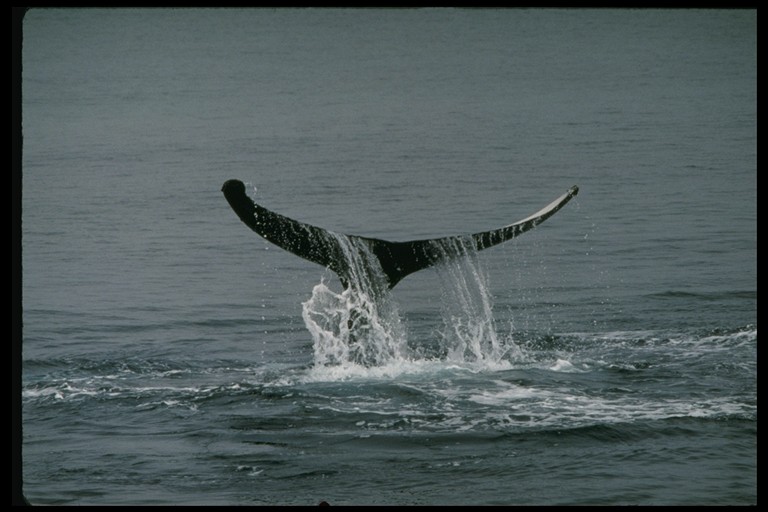
and their flukes as they make a terminal dive to the bottom.
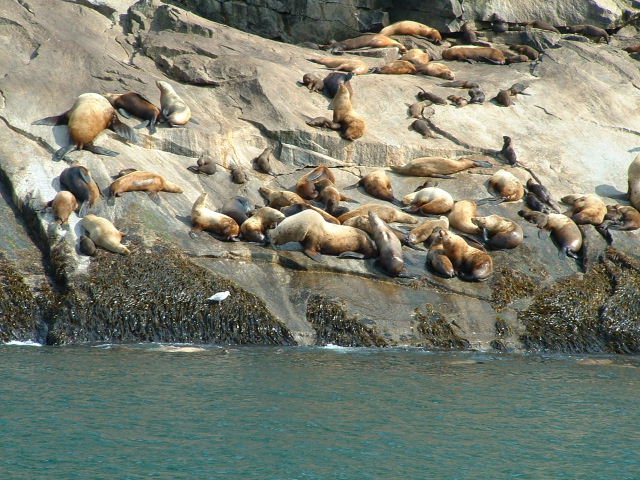
We also saw about two or three dozen Steller sea lions sunning themselves on some rocks.