Day Prev 1 2 3 4 5 6 7 8 9 10 11 12 Next
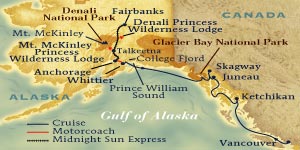
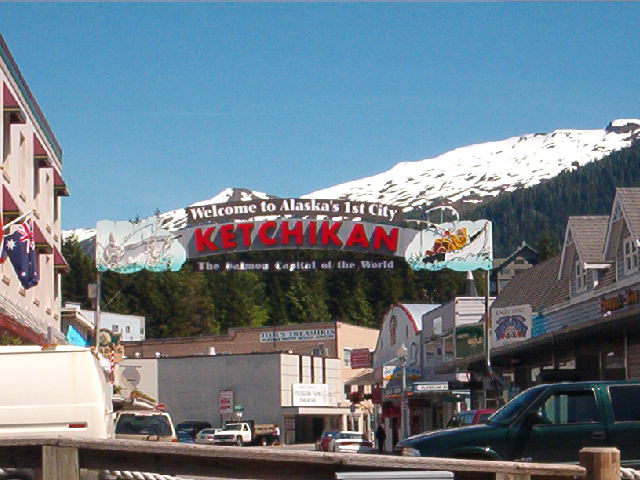
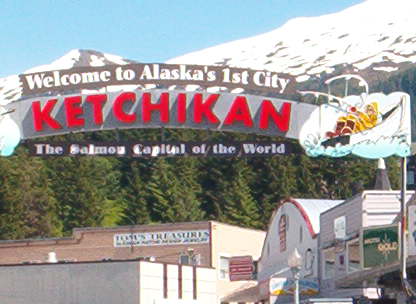
Our last Alaskan port of call was Alaska's fourth largest city, Ketchikan. In 1883 the first white settlers came to Ketchikan and built a fish saltery, followed by more than a dozen canneries producing more than 2 million cases of salmon per year. Ketchikan quickly earned the title Salmon Capital of the World.
It's also known as Alaska's "First City" because it's the first major community travelers come to as they head north.
The other mainstay of Ketchikan for the past several years has been tourism. Ketchikan is accessible only by water, for even the local airport is on another island.
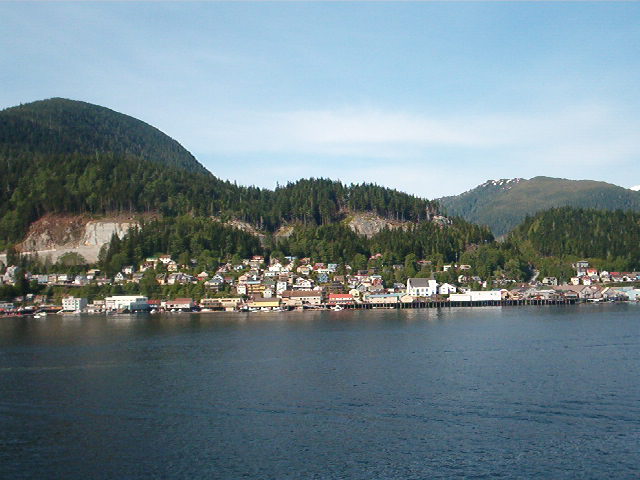
The town occupies a prime spot on the western coast of Revillagigedo Island, built on the site of a Tlingit fishing camp. It has a higher concentration of Native Alaskans than any other city in the state. Ketchikan enjoys a lush green landscape 365 days a year thanks to an average 162 inches of precipitation annually. The local saying is, "If you can't see Deer Mountain then it's raining, if you can see Deer Mountain then it's going to rain." Winters can be chilly but the year round climate is rather temperate and temperatures can reach into the 70's during the summer. We got very lucky, with a bright sunny day and temperatures in the high 60's and perhaps even low 70's.
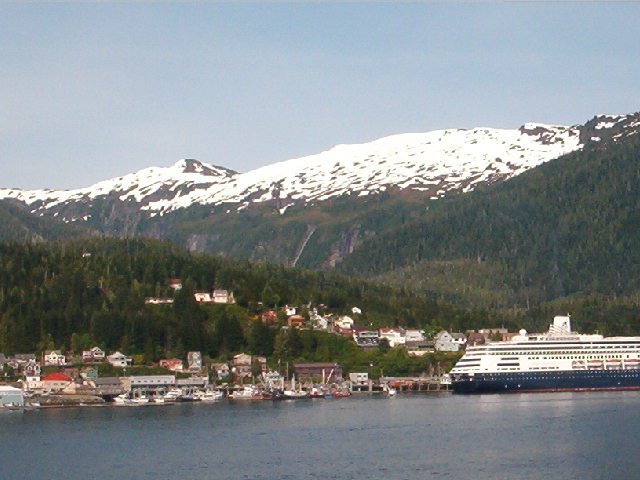
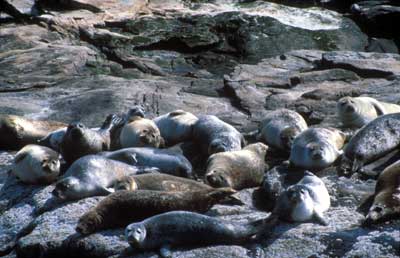
The ship wasn't able to dock at the pier because there were too many other ships already docked. We anchored in Tongass Narrows and had to take tenders to shore. We climbed aboard a catamaran for our tour and headed out. We saw a whale and numerous eagles on our way. We also came in close to land at one point and saw some starfish. We saw an eagle on a rock eating a fish, with a pair of ravens edging towards it. I imagine the ravens were waiting for leftovers, because they seemed afraid to get too close to the eagle. We also saw a whole bunch of harbor seals sunning themselves on some rocks.
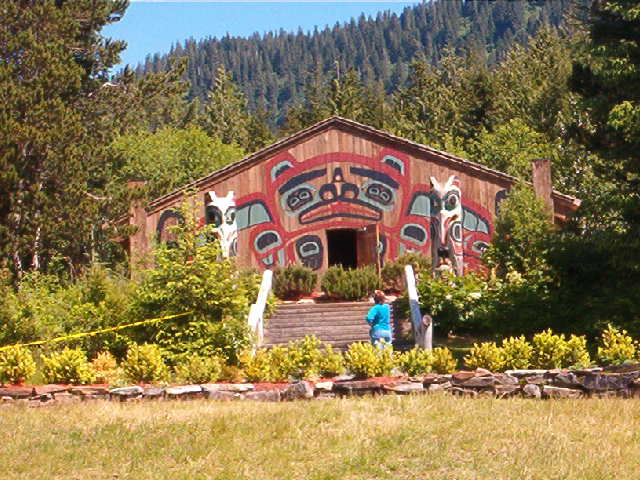
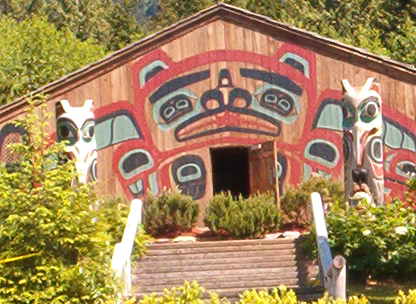
We docked at historic Libby Cannery. It hasn't operated since the late 1950's but has been preserved as a sort of museum, including many of the machines that were used for canning salmon. We then drove back to town, stopping briefly at Saxman Native Village, home of the world's largest collection of totem poles.
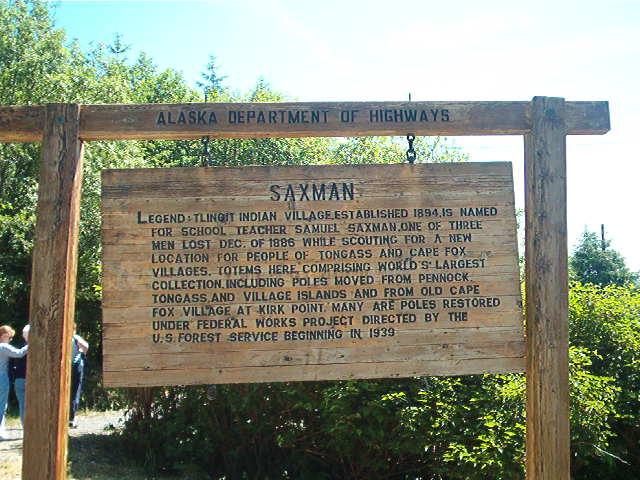
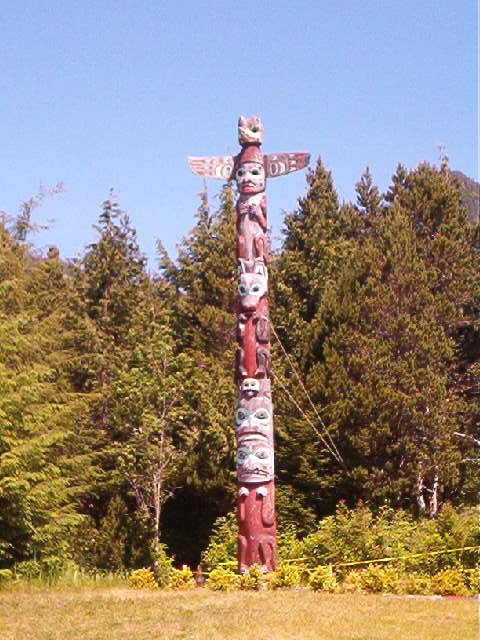
It also contains a reproduction of an Indian clan house.
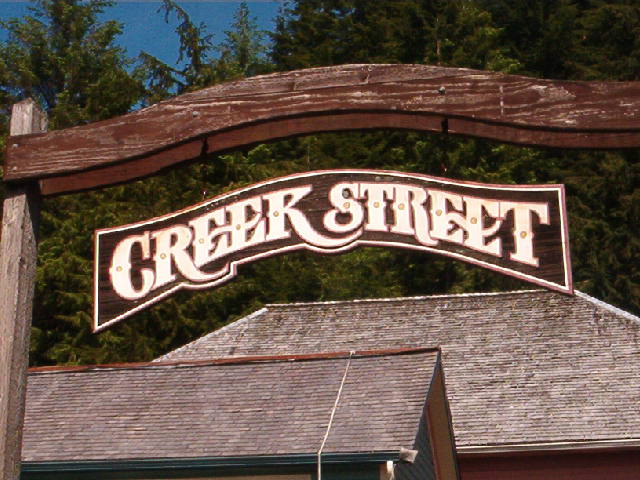
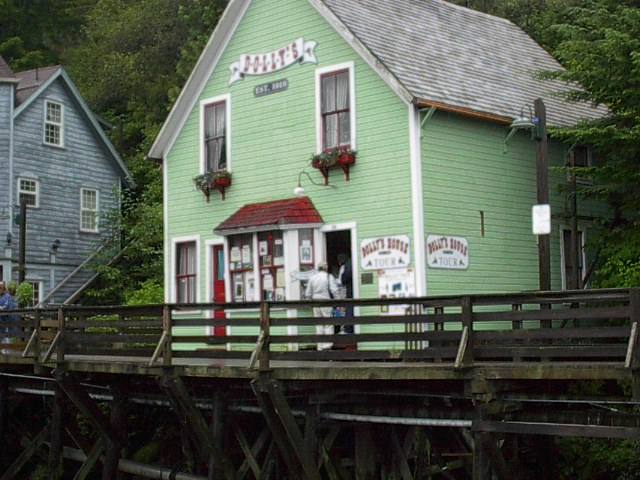
After the tour we wandered into town, and strolled along historic Creek Street, a boardwalk connecting a string of waterfront houses and tourist shops.
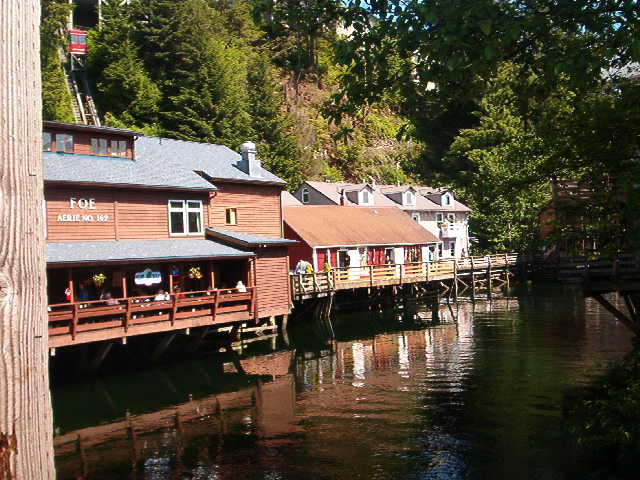
This is the site of Dolly's House, a former bordello that is now a museum.
We took a tender back to the ship, and took these pictures of Ketchikan from the balcony of our cabin.