Day Prev 1 2 3 4 5 6 7 8 9 10 11 12 Next
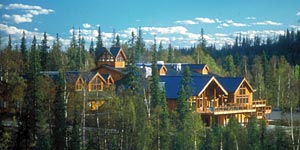
We had the day to ourselves, so we wandered down to the lodge.
We had breakfast on the deck that had views of the Alaska Range and Denali.
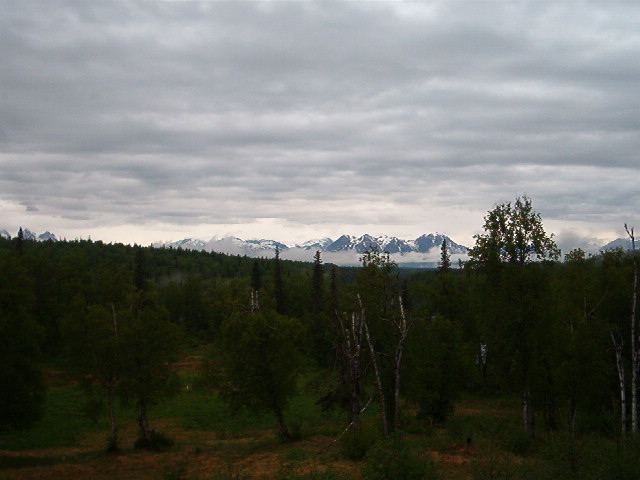
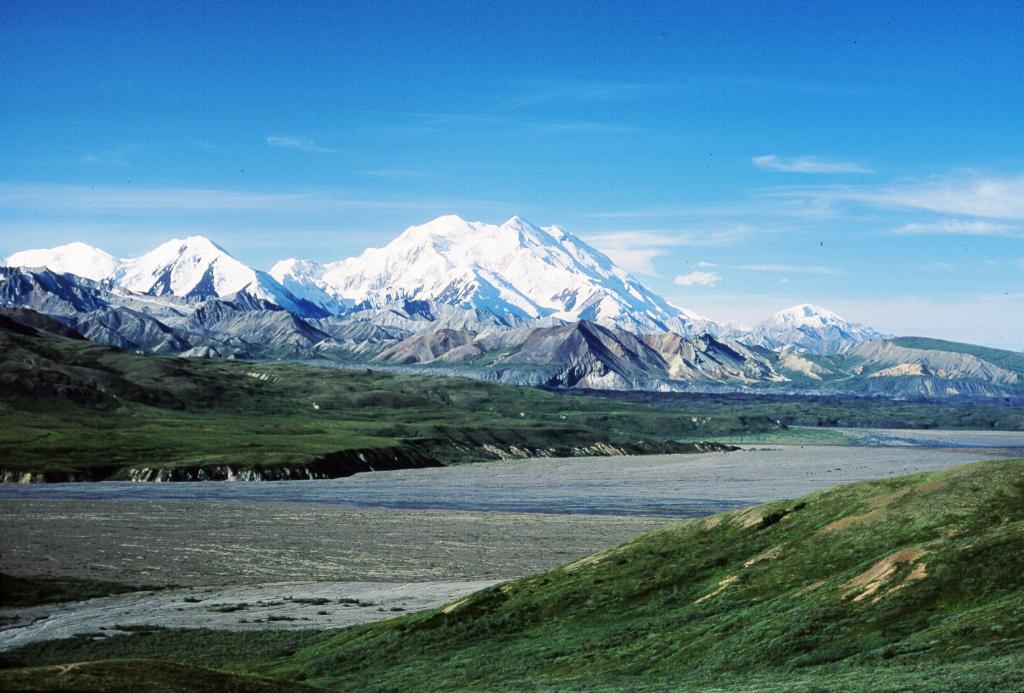
Denali is another name for Mount McKinley, which is a source of great confusion for everybody until they figure that out. But no matter what you call it, we couldn't see it. Denali is so tall at 20,320 feet that it "makes it's own weather", and it was constantly hidden by clouds. At this time of year, it's only visible once or twice a week and then only for a short period and not very clear. The best time to see the mountain is in the winter. But here's what it looks like:
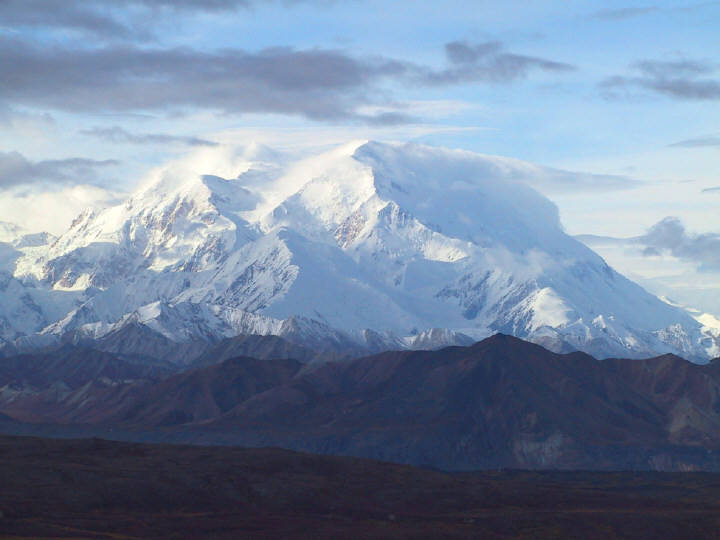
You can also see this larger picture of Denali.
We then went on a short hike around a trail in back of the lodge. One of the other trails was closed because a moose was spotted with a calf on the trail, and a mother moose can be dangerous.
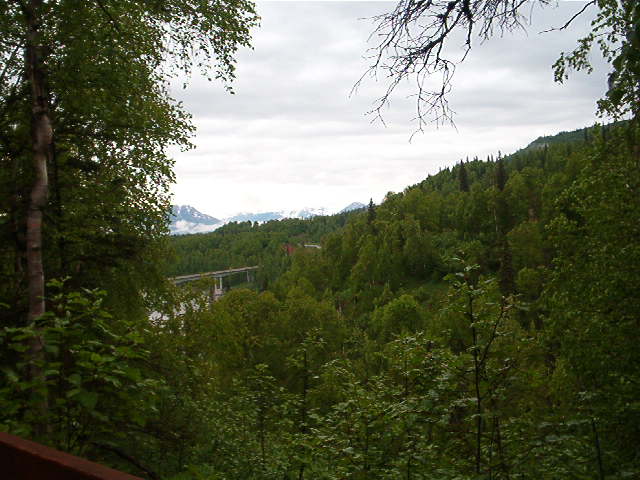
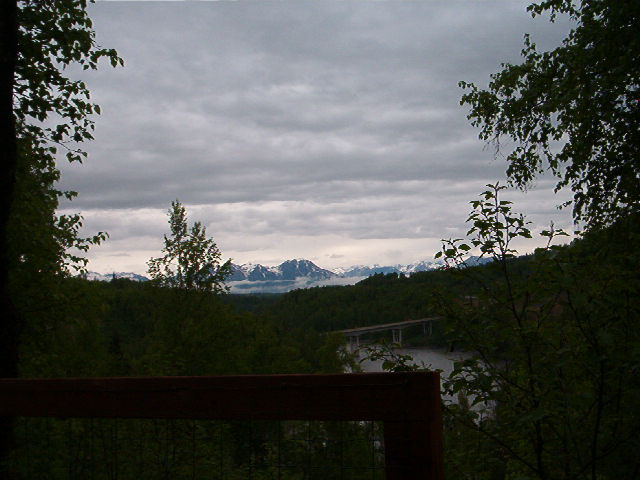
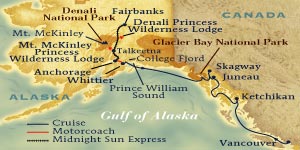
We bought some stuff from the gift shop, and then took a one-hour bus ride to Talkeetna. Talkeetna is about 50 miles from the base of Denali, and is the jumping-off point for all hiking expeditions up Denali. The mountain rises up from a glacier, and the original hiking path went across the glacier and up the mountain. These days most people take a plane with skids that can land on the ice, then hike up the mountain. Talkeetna is very small (we walked from one end to the other in about ten minutes at a leisurely pace), with fewer than 1000 people living there, and is very much a tourist town. There are all sorts of tours from horseback riding to white water rafting to flightseeing. We decided to just take the day to relax in the town.
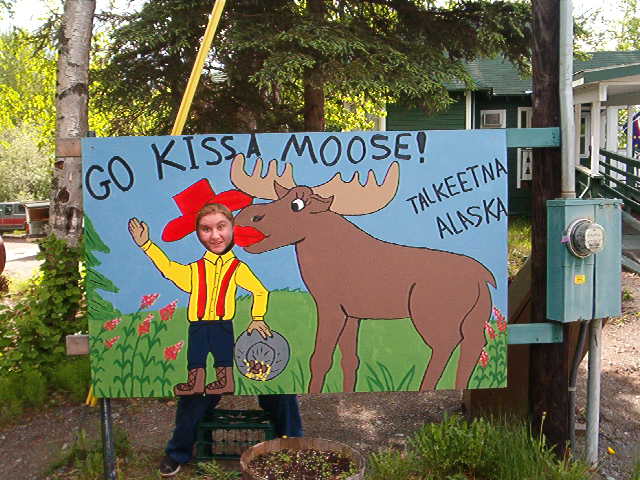
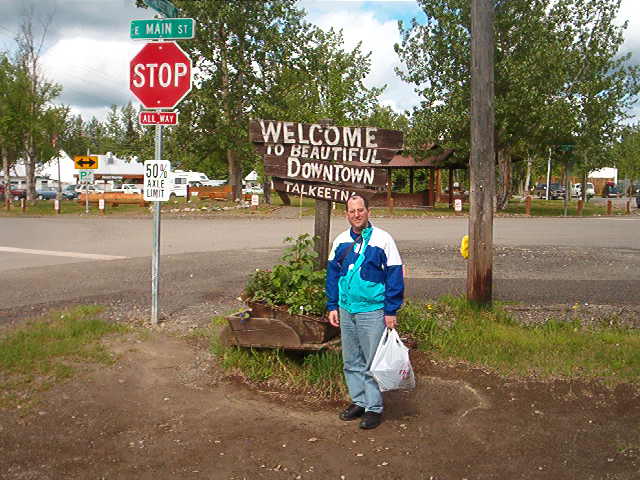
We had a bit of a surprise for lunch. All of the eateries on the main street seemed to be "greasy spoon" types of places, and we didn't just want a burger. So we went to the end of town and tried a place called Cafe Michele. It didn't look like much from the outside, but once we went inside we were shocked to find an elegant restaurant that has been featured on the Food Network's "Best Of ..." show.
We stopped at the post office to mail some postcards and a package of salmon to some friends and family. Then we took a walking tour of Talkeetna's historical buildings. Talkeetna was originally the site of a Tanaina Indian village, and Talkeetna is an Indian word meaning "where the rivers join", as The Talkeetna and Chulitna Rivers join the Susitna River at Talkeetna. Talkeetna was established as a mining town and trading post in 1896, before Anchorage existed. A gold rush to the Susitna River brought prospectors to the area, and by 1910, Talkeetna became a riverboat steamer station. In 1915, Talkeetna was chosen as the site for the Alaska Engineering Commission, who would build the Alaska Railroad, and the community peaked near 1,000. World War I and completion of the railroad in 1919 dramatically decreased the population. Several of its old log buildings are historical landmarks, and Talkeetna was placed on the National Register of Historic Places in April 1993.
One museum contained a scale model of Mt. McKinley and the surrounding mountains, and we caught a talk by a park ranger about the mountain and some information about the rules for climbing the mountain.
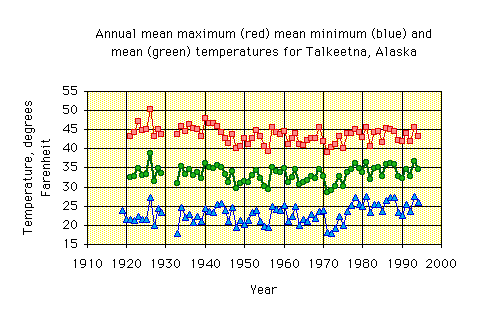
In Denali, the town was just a summer residence as the area gets extremely cold with dangerous winds and many feet of snow. In Talkeetna, many residents live there all year. It's only 120 miles north of Anchorage. The temperatures really aren't that bad, even in the winter.
At 4:30, we walked to the rail depot and boarded the Midnight Sun Express to ride to Anchorage. We had dinner in the dining car, which was very good. However, drinking was somewhat of a challenge in a moving rail car, which seemed to be going a good bit faster than it did on the trip to Denali.
We settled into our room in the Anchorage Hilton, Alaska's largest hotel, located in the heart of downtown Anchorage. Anchorage is Alaska's largest city with a population of 260,000. Anchorage is home to Elmendorf Air Force Base and the start of the Iditarod Trail Sled Dog Race. On March 27th, 1964, the Good Friday earthquake hit Anchorage and Southcentral Alaska. This earthquake measured 8.6 on the Richter scale, the largest ever recorded in North America and, because Anchorage lay only 80 miles from the epicenter damage to structures ran to the hundreds of millions of dollars. Anchorage residents still remember "The Big One", and you can see areas of Anchorage that sunk quite a few feet during the earthquake
It was 9:00 at night but still broad daylight so we took a short walk around downtown Anchorage. It looked like any downtown area, but heavy on the tourist shops.